
What happens when the future you imagined for yourself changes?
For Dr. Salma Habib, that question became deeply personal after the loss of her triplet daughters. Years later, she began writing letters to them. Those private conversations eventually became Wombless: Letters to My Triplets, a book connecting personal experience, psychological insight, and the relationship she continues to carry with her children.
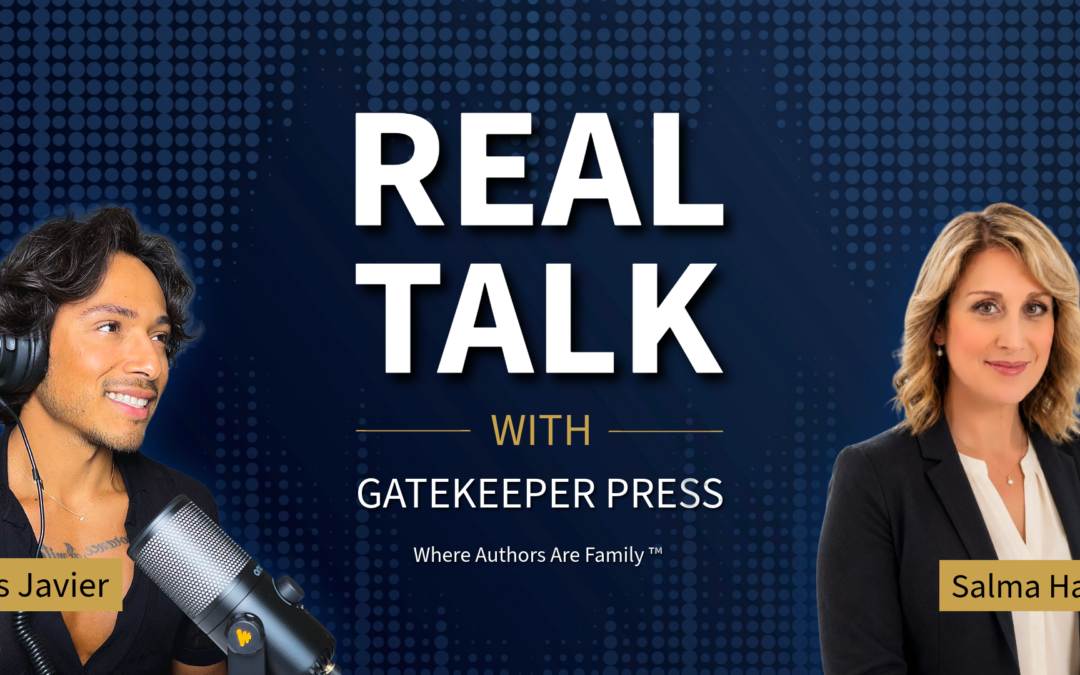
In Episode 3 of Real Talk with Gatekeeper Press, host Luis Javier sits down with Salma, a licensed psychologist and author, to explore grief, motherhood, identity, and the courage it takes to share an intimate story.
Their conversation follows the journey from private writing to a published book, asking what it means to understand yourself when life takes a direction you never expected.
The Daughters Behind Wombless: Letters to My Triplets
Before there was a book, there were three daughters.
Salma describes her triplets as her inspiration and her three shining stars. Losing them was, in her words, the most traumatic experience of her life. Her connection with them continued, even when she was unable to acknowledge the full weight of their loss.
For years, she focused on her education, completing her master’s degree and pursuing her PhD. Then, during her doctoral studies, something someone said brought her grief to the surface.
Ten years had passed.
“It took me 10 years to even acknowledge that I suffered a loss.”
Her account gives the conversation an essential starting point. Salma’s grief did not follow the timing others might have expected.
She encourages people to recognize differences in how loss is experienced and to communicate with loved ones who may struggle to understand them. In her own story, acknowledging the loss opened a different relationship with the daughters she had never had the opportunity to hold.
Writing Letters as a Way to Connect
Writing had been part of Salma’s life since childhood. She began keeping diaries at ten and still has them. As life became more difficult in her early twenties, that practice fell away.
In 2017, she returned to it with a different reader in mind.
Instead of addressing a diary, she addressed her daughters.
The letters gave her somewhere to share her life with them. She could tell them who she was, what she was experiencing, and what she wished they could tell her in return.
“I wasn’t thinking I was going to be an author.”
That distinction matters to the story behind Wombless. The writing began as a relationship, long before it became a manuscript.
For writers considering how to tell a personal story, Salma’s experience offers a useful perspective. The first pages do not have to carry the expectations of a finished book. In her case, discovering whom she wanted to speak to gave the writing its direction.
Understanding Grief Without Approving of the Loss
Salma’s training as a psychologist helped her observe her own experience and try to make sense of it. She describes being both the person living through the emotions and an observer able to consider what was happening.
One distinction became particularly meaningful. Acceptance did not mean being pleased with what had happened.
“Acceptance is acknowledging that something happened.”
For Salma, acknowledging reality left room for sadness, disappointment, and other feelings. It did not require her to approve of the loss.
She also speaks about awareness of both her internal experience and her surroundings. What was she feeling? What had happened around her? What had brought those feelings forward?
These reflections became part of what she wanted to offer through Wombless: her own experience alongside psychological insight and questions readers could consider in relation to their lives.
Grieving the Future You Imagined
The conversation also explores a less visible part of loss: the version of yourself you expected to become.
For Salma, motherhood was deeply connected to her sense of identity. When that future changed, she faced the difficult work of discovering who she could be within the life she was living.
She describes a distance between the self she had imagined and the self she needed to get to know. Bridging that distance took time.
Part of that work meant offering herself the care she wished she had received when she was younger. She wanted to embrace herself in the present and make room for a different understanding of her life.
Throughout the interview, authenticity is closely connected to safety. Salma speaks about wanting to feel safe with herself, in her relationships, and in her future. She acknowledges how difficult that can become after painful experiences, while holding onto the possibility of change.
Family Relationships and Finding Your Own Identity
Salma speaks with affection and admiration about her mother, whom she describes as her role model. She also discusses the difficulty of developing an independent identity while carrying expectations shaped by family and culture.
Born in the Middle East and moving to the United States as an adult, Salma recognizes multiple cultural layers within those relationships.
Her account makes room for both love and hurt. She can admire her mother while acknowledging that certain decisions and expectations affected her deeply.
A conversation between them brought relief and a sense of being loved and accepted. Later, Salma realized there was more to discuss. Understanding developed through further exchanges.
For someone writing about family, that complexity is significant. A personal story can hold affection, gratitude, conflict, and unanswered questions together. Salma’s reflections preserve the relationship’s depth as she examines its influence on her life.
From Private Letters to a Published Book
Sharing the letters publicly required a different kind of courage.
Salma’s earlier creative life included television, radio, theater, and music. She loved performing and connecting with an audience, but she also knew the fear of judgment and the impulse to please others.
Publishing Wombless meant letting readers encounter parts of herself she had kept private. She describes roughly six years between beginning the letters in 2017 and reaching the point, in 2023, when she was ready to share them.
Her husband encouraged her along the way. Her decision ultimately connected to a desire to raise awareness and give her daughters’ memory a wider presence.
As a psychologist, she also considered what public vulnerability could mean professionally. She speaks about feeling proud of her decision while maintaining appropriate boundaries with clients.
The book reflects that relationship between personal experience and professional perspective. Salma wanted readers to encounter her story alongside insights, coping skills, and ideas that might prompt reflection.
QR codes throughout the book allow readers to hear her audio reflections, extending the connection beyond the printed page.
“I’m eager to connect.”
Hearing her voice offers readers another way to accompany her through the experience. It also reconnects authorship with the creative life she has long valued: speaking, sharing, and interacting with an audience.
What Healing Means to Salma Today
Asked what healing means to her now, Salma describes an ongoing journey.
She challenges the pressure to simply move past painful experiences. In her own understanding of healing, the pain needs to be encountered.
“You cannot get over the pain. You need to go through it.”
She uses the image of armor to describe the attempt to protect yourself from being hurt. In her telling, that protection can also make it harder to experience love and joy.
The conversation returns to the individual nature of that work. Some people need solitude. Others need company. Salma encourages attention to what feels authentic and to the circumstances that make it difficult to be yourself.
Readers interested in another perspective on vulnerability and writing can also explore Shaun Zetlin’s conversation about emotional fitness, the previous episode of Real Talk with Gatekeeper Press.
Salma Habib’s Closing Transmission
Every episode ends with a final transmission to the world.
Salma’s message acknowledges that living with mental health challenges can be difficult. She imagines progress through the colors of martial arts belts, with each stage carrying value even if someone has not reached the black belt they hoped for.
She encourages noticing one thing to be grateful for each day and remembering the importance of caring for yourself.
“Self-care is not selfish.”
Her closing message reflects the care running through the conversation: attention to your own experience, respect for the time it takes, and room to keep living while the work continues.
Watch Episode 3 of Real Talk with Gatekeeper Press
Watch the full conversation with Dr. Salma Habib to hear more about Wombless: Letters to My Triplets, the letters behind the book, her reflections on grief and identity, and the decision to share her story with readers.
You can also listen to Real Talk with Gatekeeper Press on Apple Podcasts and Spotify.
About Real Talk with Gatekeeper Press
Hosted by Luis Javier, Real Talk with Gatekeeper Press explores the lives, inspirations, and publishing journeys of Gatekeeper Press authors. Each conversation goes beyond the book to meet the person behind it.
Every book begins somewhere. For Salma, it began with letters to her daughters. If you’re ready to turn your own story into a book, Gatekeeper Press offers professional publishing support while you retain your rights and creative control.